
Audiology
Need to contact us?
Get in touch with our admin team
Cleft Palate, Hearing and Glue Ear
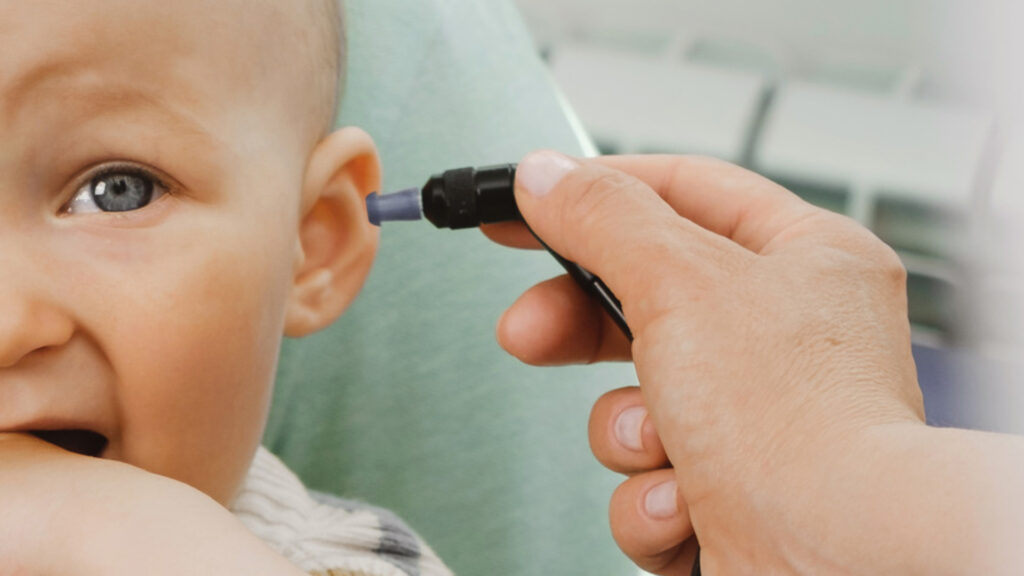
Children with a cleft palate can be more susceptible to middle-ear problems, including glue ear, which can affect hearing.
Why can cleft palate affect hearing?
The muscles in the palate help the Eustachian tube (the small passage between the middle ear and the back of the nose) open and ventilate the area just behind the eardrum called the middle ear. In children with a cleft palate, these muscles may not work in the usual way. Fluid can then build up behind the eardrum. This is called glue ear or otitis media with effusion.
See this informative NHS video on glue ear
Check the NDCS website for more information on treating glue ear
Glue ear can cause a temporary or fluctuating hearing loss. This means sounds may seem muffled and your child’s hearing can vary from day to day. Not every child with a cleft palate will have hearing difficulties.
What might I notice?
- Your child does not always respond when you call their name.
- They ask you to repeat things or say “what?” often.
- They turn the television or devices up louder.
- They find it harder to hear in groups or noisy places.
- They seem to miss instructions or watch your face closely when you speak.
- They become frustrated when trying to follow conversations.
What happens in the appointment?
We see children under the age of seven years, and occasionally older children when they attend the joint cleft lip and palate clinic at Royal Manchester Children’s Hospital. Children who live in South or Central
Manchester may also be seen by us at a local clinic between visits to the joint cleft lip and palate clinic.
The hearing tests we use depend on your child’s age, development, ability and interests. Some children may be seen by one clinician and others by two.
During the appointment, we will ask about your child’s hearing and development. We will choose suitable tests to learn about their hearing levels and the general health of their ears. We will discuss the results with you at the end of the appointment.
We write a report about results of each hearing assessment which is sent to the child’s parents or guardians. A copy of the report is also sent to the child’s GP and usually to the child’s local audiology service.
We take audit records for all children with a cleft palate at the age of 5 years. We receive reports of audiological assessments carried out on children with cleft palate by local audiology services
The tests that we use:
Used from around 6-8 months (can be used up to 24 months). A variety of sounds using rattles, voice, chimes or warble sounds are made at various levels either to the right or left side of the child, out of their field of view. Here we assess the child’s ability to hear the sound and turn their head to locate it.
Used from around 6-24 months. Sounds are presented through speakers either side of the child and in response to the child hearing and turning to locate the sound, a visual reward is presented in form of an illuminated toy or flashing light. Here we can assess more frequency specific information which is important for speech development. We can also obtain ear specific information if completed using headphones or small insert tips placed into the child’s ear.
Used from 20 months to 5 years old. It is important the child understands simple instructions and commands for this assessment. A game is played where the child is asked to perform an action in response to hearing the sound. This could be by placing a man in a boat, a peg on a board or stacking toys. The sound can be presented in various ways depending on their developmental age such as loudspeaker, headphones or insert tips. Sounds are presented at various frequencies and we determine the lowest level the child can hear at each frequency.
Used for school aged children. Sounds are presented through wearing headphones or insert tips. The child is asked to press a button or saying ‘yes’ in response to hearing sound. Sounds are presented at different frequency and intensity levels. The sound is first presented at a louder
level and gradually reduced until the child stops responding. Results are plotted onto an audiogram.
An otoscope is used to check the child’s ears.
A tympanometer is used to assess the middle ear. A small soft probe is inserted in the child’s ear which changes the air pressure in the ear causing the ear drum to move back and forth. It can help determine if the child has fluid behind their eardrum or any perforations.
This is similar to the test used for newborn hearing screening. A small probe tip is inserted into the child’s ear and sound is presented, the inner ears (outer hair cell) response to this sound known as ‘echo’ is measured by the same probe. This test can give an indication of any damage to these hair cells which affect hearing thresholds.
The age ranges are a guide only. The most suitable test is chosen for each child, and more than one test may be used.
Treatment for Glue Ear:
Some parents prefer hearing aids because no surgery is involved. Modern hearing aids are small and can be programmed to meet your child's hearing needs.
If you are unsure which treatment is best for your child, talk to your audiologist or ENT consultant. See the NHS glue ear decision support tool to help you understand and decide the treatment option for glue ear for your child.
A grommet is a small tube that’s placed in your childs ear during surgery. It drains the fluid and keeps the eardrum open. The grommet should fall out naturally within 6-12 months as your child‘s ear gets bigger.
Otovent is an autoinflation device which uses a specially pressurised balloon to open the eustachian tubes and can be used in children once they are able to blow their nose. This allows the fluid associated with glue ear to drain away through the eustachian tube.
You can find more information here.